
You have 0 items in your cart
Lodi Gardens
Elsewhere in the gardens lie the tombs of Mohammed Shah and Sikander Lodi, both of which are relatively rare examples of architecture from their respective periods. Lodhi Garden is famous for its blend of 15th-century Lodhi dynasty tombs and its 90-acre lush greenery, making it both a historical site and leisure park. However, if you’re a tourist in Delhi and visiting Lodhi Garden for the first time, you’ll want to see the attractions that are scattered around the gardens.
Uwillfindapoorva's 3 days trip to Delhi
With 2,748 posts (plus over 19,500 images on Instagram), it (The Delhi Walla) features the Delhi you should see, the Delhi that you never see, the Delhi that lies forgotten and sometimes even the Delhi that will come to be. Members of the transgender community visits the graveyard on Thursdays to Lodhi Garden offer flowers. The dome of poet Rahim’s tomb on Mathura Road was once fully marble. (Sometimes citizens get confused between the two; he ends up waiting for her at the Coffee House, she for him at the Coffee Home). The city itself, it seems, produces pairs in countless forms. The two bougainvillea trees are currently in bloom, synchronising in perfect jugalbandi with each other, twinning brightly, here at Lodhi Garden.
The most affordable and convenient way to get to Lodhi Gardens is to take the Metro to Jor Bagh station. The façade gives the impression of a two-storeyed building, typical of Lodi architecture. The late 15th century Sheesh Gumbad (“Glass Dome”) is built on a raised incline north of the Bara Gumbad and was once decorated with glazed blue tiles, painted floral designs and Koranic inscriptions. Landscaped at the behest of Lady Willingdon, the vicereine in 1936 Lodhi Garden acts as a “green lung” for the people of Delhi.
3 लोधी गार्डन कैसे पहुंचे बस से – How To Reach Lodhi Garden By Bus In Hindi

During these months, the winter season brings in comfortable temperatures that make it ideal for long walks and visiting historic monuments. Bara Gumbad (Big Dome) and Shisha Gumbad (Glass Dome) tombs are special mainly because of their style and mysterious past. It is such a tomb that is a perfect example of how simple architecture can be so elegant during the period of Lodhi.
From the metro station, the Lodhi Garden is about 15-minute walk. Other than that you can also choose for metro, the nearest metro station to Lodhi Garden location is the Jor Bagh Metro Station, which is a part of the Yellow line. Lodhi Garden in Delhi also offers lush greenery and blooming flowers, making it a soothing escape from city life. Nestled in the heart of Delhi Lodhi Garden is spread across 90 acres and is both a green space and a treasure trove of history.
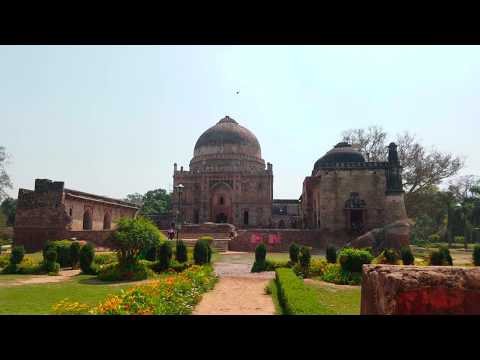
From there, you can take an auto-rickshaw or a cab to Lodhi Garden. It has four arched openings on each side that lead to the tomb chamber. The mosque is one of the finest examples of Lodi architecture, with five arched openings and three domes.
- So parking tips are not the only hack you’ll find in this post 🙂
- Both the Bara Gumbad and the mosque were built in 1494 during the reign of Sikander Lodi, there is also a residence surrounding a central courtyard, where the remains of a water tank can be seen.
- Sikander Lodhi’s tomb, built by his son in 1517, is also an octagonal structure decorated with Hindu motifs.
- It spans the waterways and connects the western and eastern parts of the garden.
- The winter months offer the most pleasant conditions for extended visits, with comfortable temperatures encouraging longer stays and more thorough exploration.
- If you want to avoid the blazing heat of the capital, October to March is the best time to come.
- The different varieties of birds which visit this place include parrots, mynas, kingfishers, and owls.
- This building is a rare remnant from the time of the Mughal Emperor Akbar.
- For travellers using Delhi Metro, the Lodhi garden nearest metro station is either JLN Stadium (Jawaharlal Nehru Stadium) on the Violet Line or Khan Market Station which is a bit further.
- It was during his reign that the gardens took shape, with the construction of tombs and other architectural structures intended to serve as mausoleums for the ruling elite.
- Throughout the park there are many more structures and ruins, with old walls, mosques and other tombs scattered around.
The building here is a blend of Sayyid and Lodhi architecture. More than a dozen magnificent Mughal structures from the 15th century may be seen inside the Lodhi Garden. Initially named after Lady Wellington, the Lodhi Garden was created to conserve and maintain the Lodi-era graves as a tourist spot.
Visible from Sikander's tomb is the Athpula ('eight-piered') Bridge, one of the few monuments in Delhi that was built during the reign of Mughal emperor Akbar. In the middle of the gardens is the Bara Gumbad (lit. 'big dome'), consisting of a large rubble-construct dome and is not a tombbetter source needed but was constructed as a gateway to either the attached three domed masjid (mosque) or a large walled enclosure. If you’re here for a walk or jog, an hour may be enough, but history buffs might want to spend more time exploring the monuments.
This tomb has an uncanny resemblance to Adham Khan’s tomb in Mehrauli, with three archways opening on each of the eight sides. Built-in the early 16th century by his son Ibrahim Lodi, this tomb is in the typical octagonal shape of the Lodi era. You have to go around it to reach the gates of Sikandar Lodi’s tomb. What is noteworthy about this bridge is that this is one of the rare imprints in Delhi from Akbar’s time.