
You have 0 items in your cart
Club purchase that comes with rules of etiquette nyt
Every day may feel like casual Friday in an online classroom where you don’t see anyone in person, but a certain level of formality is still expected in your communication with instructors https://online-el-royale.com/. In addition to proper punctuation and spelling, it’s good netiquette to use respectful greetings and signatures, full sentences and even the same old “please” and “thank you” you use in real life.
This is true for both posting to online course walls or discussions—like those found in online programs at Rasmussen University—and with personal email communications with your professors and advisors. Using appropriate capitalization and focusing on your tone when writing will give your virtual communication a boost.
Plus, practicing professional communication skills while you’re in school will serve you will in the workplace as well—whether you end up working remotely or not. Rasmussen University places a special emphasis on practicing transferable skills that you can take from the classroom to the workplace.
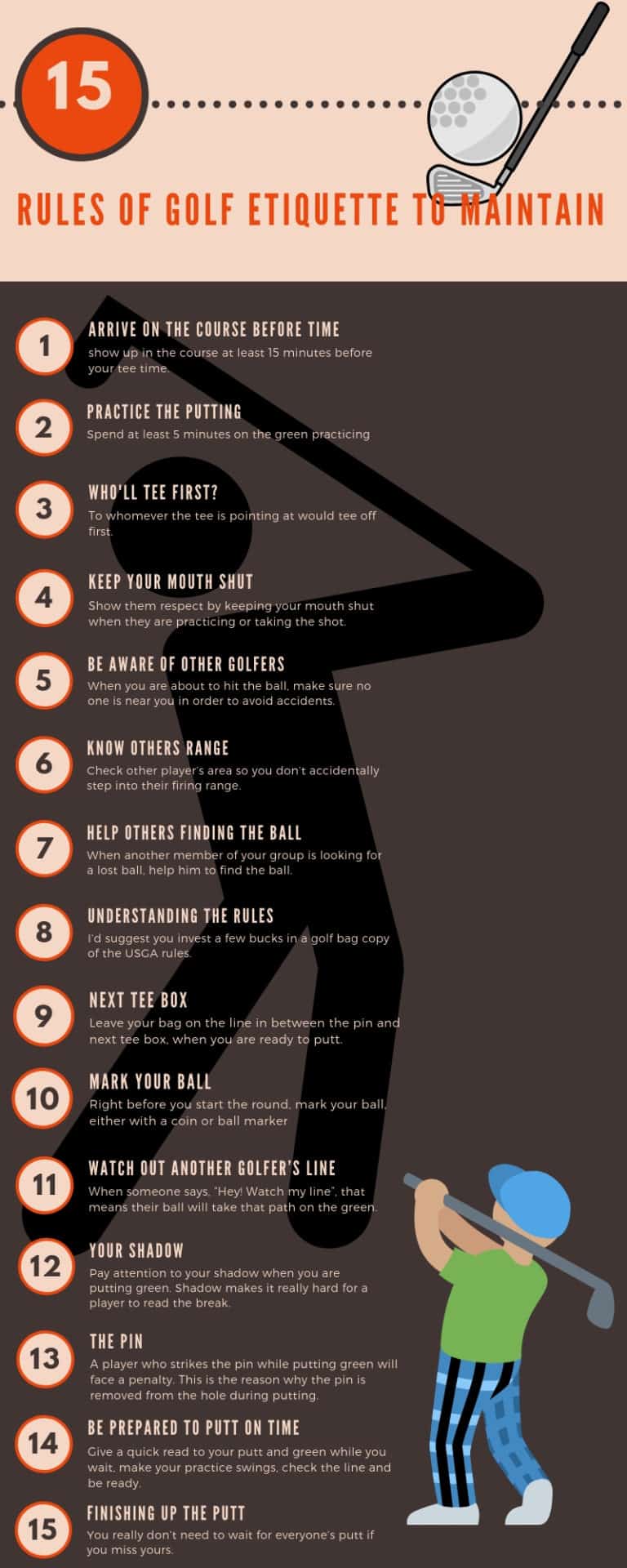
10 rules of golf etiquette
Until you arrive at the green, if you are ready, hit the ball even if you aren’t away. At the tee and on the green, be ready once it is your turn. If you lose a ball, do not search for a maximum of five minutes.
Golf etiquette is an important part of the game and one area that many golfers overlook when on the green is where they stand. Standing behind someone while they putt can be very distracting; as such, it’s important to remember never to stand directly behind or in their line of sight.
Golf is a game of skill, strategy, and sportsmanship. Whether you’re a seasoned pro or just starting out, adhering to proper golf etiquette is essential for an enjoyable and respectful experience for everyone on the course. In this post, we’ll explore 10 fundamental golf course etiquette rules, providing beginners with a solid foundation to build upon. Let’s dive into the world of golf etiquette!
There are a hundred bits of etiquette I haven’t mentioned, like laying the flagstick down carefully, tamping down spike marks when you’re walking off a green, letting faster groups play through, and so on. All of these things are learned by observing, with a sharp eye and a considerate heart. Just know that golf has a way of returning favors, and every piece of etiquette you practice will be repaid tenfold.
After landing on the green, repair any ball marks or divots you create. This simple act of golf course etiquette can be done by using a ball mark repair tool to gently restore the putting surface. Repairing ball marks is a sign of respect for the course and future golfers.
The unwritten rules of professional etiquette
Psychologist and associate professor Ryan Sharma has been mentoring students through higher education for over 14 years, teaching classes in professionalism, consultation, and clinical supervision. In his role as the director of clinical training at California Lutheran University, he helps students develop their professional identity so that they can be successful working alongside seasoned clinicians. When he is not teaching or treating anxiety in his private practice, he is either woodworking or spending time with his wife and three children.
Examples like these highlight the clear difference between competence and professionalism. Your work quality and your interpersonal skills and attitude are distinctly different areas of development. You can be very competent in your work—doing everything with high quality—and yet be difficult to work with. You can be competent and unprofessional or incompetent and professional. You could also be both competent and professional, though you could also be neither.
The people in your program who have evaluative power or authority are the ones who will most directly judge your professionalism. Because of this, I use terms such as professor, faculty member, instructor, supervisor, and advisor somewhat interchangeably; teaching assistants and other senior students may also at times fill teaching or advising roles. It cannot be overstated that how you behave around staff as well as peers also shapes your professional reputation. For example, when a student is rude to our administrative assistant, the faculty hears about it. When students come forward with a concern about the behavior of one of their peers, the faculty will investigate. All of this protects the profession.
The purpose of this book is twofold. First, it provides you with situational awareness of how faculty members are most likely to judge professional etiquette. Second, it provides concrete, immediately applicable advice on appropriate professional responses to those situations you are likely to encounter. I am writing down many of the unwritten rules. I will also share with you why those rules exist so that you may have a successful graduate-level academic experience and future professional life.
Have you ever worked with or hired someone, found that they did high-quality work and were very competent, but you really disliked working with them? Maybe you knew a teacher who was exceptionally knowledgeable but also unreliable, aloof, or critical. Perhaps you hired a personal trainer who created excellent routines for you but was frequently unavailable, did not communicate with you, or did not follow through on agreements. What was it like working with them? How did you describe these people to others? How have others described these kinds of professionals to you? Conversely, have you ever hired someone who fell short on their work but did their best to meet your needs? Perhaps someone lost your important paperwork but apologized and helped expedite a new set of forms. What about the therapist or physician who was unable to help you with your condition but made sure to connect you to someone who could?
Although this book was motivated by my own experiences and the values that I believe are most relevant to professional deportment, I have focused on widely shared expectations gathered from other professors, ethical case studies, and broad psychological principles. I believe these expectations are similar to ones found in other disciplines and areas of study and can effectively serve as a starting point as you evaluate your own behaviors in your program.